Battery Chem™ is a revolutionary
green technology that is formulated from several dry chemical
additives.
It is designed to rejuvenate and
extend the life of lead-acid batteries that are commonly found in
vehicles such as cars, buses, trucks, motorcycles, golf carts, forklifts, vans,
boats, military vehicles, as well as equipments and generators.
Battery Chem™ will help in removing
sulfation build up in batteries. It also keeps the battery plates
and separators clean and in good working condition and does not
contain EDTA .(EthyleneDiammineTetraAcetate)
Battery Chem™ helps consumers,
corporations and organizations save millions of dollars in battery
replacement cost. At the same time, the users save time in battery
disposal efforts.
The environment is protected as well
because fewer batteries are sent to the landfill.
Sulfated
Plates
An
Important Message From Walt Barrett about The Battery Chem™
Forklift Battery Reconditioning Program
Some of our dealers have said that they could not get
enough used automotive batteries to recondition. Well,
we have a solution to that problem: Electric Forklift
Batteries; there are thousands of them in every state.
Last year, we had a client come to us with three very
large electric forklift batteries that were in terrible
condition and also very old. They had sat in a very cold
warehouse for three years.
They
were nearly dried out inside but still read 36 volts
each. The cells would not pass a load test, though. We
decided to recondition them anyway as a test and follow
up by checking periodically with the owner. We started
by adding the missing water from the cells and then we
added one cup of Battery Chem™ per cell. After that we
gave them a full charging session and put them into
service. I was very doubtful myself as to the outcome,
but to my surprise they have been working perfectly now
for over a year. The owner of these batteries is very
happy with us and our product because we have saved him
a total of nearly $20,000 in replacement costs for the
three batteries.
The
point I want to make here is that there are thousands of
electric forklifts all over the USA in warehouses and
most of them are terribly neglected. Because of this we
have expanded our company and also have a new forklift
service training film and manual for our regular and new
dealers and they describe the entire forklift battery
reconditioning process. As usual, if you contact us we
will train you 100% free and sell you Battery Chem™ as
needed. We will also show you how easy it is to get
these new forklift clients and where to find them. We
have a great new free program lined up for you. Our
dealers are charging $500 per battery to recondition
them and offer an additional service contract for $100 a
service call. Believe me, at easily $7,000 replacement
cost these companies should be glad to see you. If you
work hard and do the marketing program you can make a
very good living servicing forklift batteries.
We
did the battery shown in the training film in under
fifteen minutes (click picture to watch the video). You
do them on site and use their charger. If you are
interested in this free information please contact me
at: chinadepot@aol.com
Thanks,
Walt
Barrett President
A
to Z global Marketing Inc.
Battery
Chem™ USA
An
American Company
Copy
and print this form for servicing customer's batteries
Click
Each to See Our Step-By-Step Videos on How to Test and Recondition a
Battery
Required Tools
A list of the tools
required to rejuvenate and recondition lead acid automotive
batteries.
Step 1
Cleaning battery terminals.
See required tools first.
Step 2
How to check battery cell
voltages.
Step 3
Testing the individual
cells of a lead acid battery.
Step 4
Load testing a battery to
determine its condition.
Step 5
The Hydrometer cell test.
Step 6
Adding the chemicals for
the reconditioning process.
Reconditioning
Sealed Batteries
Sealed
batteries require an additional step before they can be tested
for reconditioning. Refer back to our other battery videos for
all the steps. Here's what you do...
HERE'S
MORE INFORMATION ON SERVICING SEALED BATTERIES:
SERVICING
BATTERIES WITH HIDDEN PLUGS
NEW!!
BATTERY RECONDITIONING BUSINESS KIT NEW!!
EVERYTHING
YOU NEED TO START YOUR OWN BATTERY RECONDITIONING BUSINESS
What You Get:
ALL for only
$1,539.00
Plus Shipping
1 6/12 Volt
Battery Charger/Starter
1 six-station multiple battery desulfating - maintainer
charger
1 set eye protection safety glasses
1 Battery Load tester 100 amps
1 Hydrometer
1 Battery filler
1 Battery post cleaner
1 Volt Meter
1 pair of cell testing probes with clips for voltmeter
1 Half inch Funnel
1 Half inch diameter stop drill for safely boring holes in
sealed batteries
1 Battery Manual on CD-ROM
5 Gallons of Battery Chem™ Battery Treatment
240 caps to re-seal drilled batteries
I wanted to let you know I have been using your product for battery descaling of the charge plates and the electrolyte freshener for a couple years now. My golf cart has been working great. The batteries were near death 2 years ago. Specific gravity was all but non existent. Now they are doing fine, specific gravity is around 1260-1300 all cells. With 2 people and clubs I was getting about 12 holes before needing a charge now I get around 27 holes. SO I'm certainly glad your out there. Have a terrific day.
Charles Martin
Regional Accounts Manager- Enterprise, American Management Association
Saranac Lake, New York Education Management
Current
American Management Association
Previous
American Management Association, 2:1 Telecom Solutions, Alcoa Fujikura
April, 2016
************************************************
"We are using your rejuvenator Chem powder. it has been working fine. We recovered some units and additionally stopped wasting energy. Thanks!"
Jose Pedro Montalvo
Electrical Engineering Manager at Fabricas Monterrey
Mexico
I’m 86, been around a long time, heard a lot of stories, some fact most
fiction.
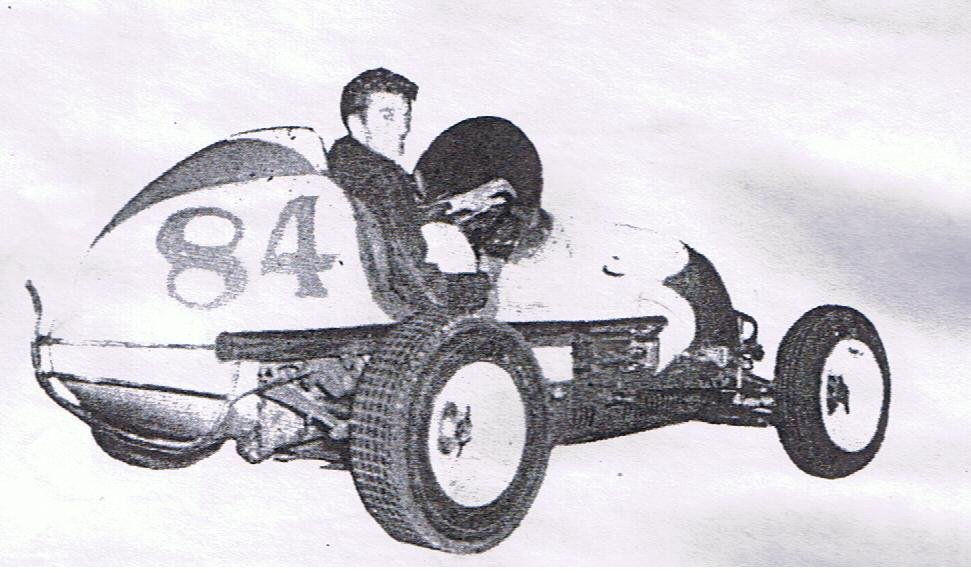
I owned and drove my own midget race car for 12 years. I purchased it from Kurtis Kraft. (see photo) . This was 1951-1963.
I’m writing this to tell all of you, if you go to the auto parts store for a battery, be ready to pay $80.00 to $120.00.
Here are the facts, not fiction. My Lincoln Town Car battery gave up (so I thought) after 4 years, I had paid $55.00 new for it in 2008. I went to a nationwide auto parts store (where I have a resale # and discount). The cheapest I could buy one was $84.00 and the best was $127.00. I
snatched the battery out of my 1977 MKV (this is a keeper) and was back in business. I started with reading up on Edison and
Tesla, (his coil) and then went to the computer and found Walt Barrett and his Web Page www.batterychem.biz.
I was crew chief on the #41 car at the Indy 500 in 1956 (see photo). I know chassis, I also know engines, and I called Walt because I knew nothing about batteries. He has a reconditioning solution and method that works!!!
I reconditioned the original battery per his video and instructions and “Bingo” my Town Car starts every morning if needed!! See photo of 1978 Modified Stock Car for “run what you bring” open comp stock car dirt. Holds track records at
Cornora ½ mile & Chula Vista ½ mile.
That car, and Phantom 1, the midget I built for him, (Brad Dunham) were battery operated (ignition). See photo.
Hi my name is Manny and I own a shipping company. In my warehouse, I use 2 forklifts and 1 power jack daily. I was having lots of problems with my forklift batteries, they weren’t charging and it got to the point that they wouldn’t even take a charge. I called a company to come and repair them. I knew I didn’t want to buy new ones because it would be too expensive. The repair man came by and tested the batteries and said they were junk, there was nothing he or anyone could do to fix them! He suggested I put my name on a waiting list for used batteries. Which even used would run me about $5200 a piece!
After contemplating my choices, I decided to go online and research other options. This is when I came across Walter Barrett’s advertisement for Battery Chem on a website. It could not hurt to call. Upon speaking to Walter Barrett and explaining the problems I was having, he told me he knew exactly what was wrong and that he would sell me the Battery Chem products to fix the batteries myself. I preferred and insisted that he do the repairs himself, since I had no experience in repairing these types of batteries.
I drove the batteries down to Walter and within a week, I received a phone call from him saying that the batteries were ready and that they were repaired with Battery Chem. I immediately installed the batteries and they ran better than they had ever run.
It’s been 2 years since the repair, and let me tell you, the batteries are still running like new. I won’t even mention the name because I don’t want to embarrass the first repair man who wanted to charge me $5200 a piece for used batteries. But I will say this I’ve never gotten a better bargain in my 20 years in business!
Walt,
I finally got around to getting that battery. This battery would not hold a charge for 5 seconds prior to this. I would let it charge on the car for an hour and it wouldn't even be able to crank it over right after you turned off the car. I put the Battery Chem you sent me in and charged it overnight. It has now been turning a 5.7 litre engine over in my Camaro now for a week and half and is working great.
I am going to look into the fork lift batteries some more. I am going to find companies that have a lot of electric fork lifts and find out what servicing they currently have, I guess if any. Do you have any tips on what to ask or how to position things with them?
I am very happy with your Battery Chem electrolyte conditioning treatment and highly recommend it to others who are looking to add more life and power to their existing batteries that they otherwise thought dead. We are saving our customers 50-75% off new prices and also saving emissions from producing new batteries. Our customers have been pleased with the product they receive and we continue to build our base of customers as some companies have been testing our product over the past year and have been buying more! We have also added to our tools with test equipment and chargers.
Our most recent customer is a large industrial warehouse that uses electric pallet jacks. Recently in for service, they were told the jack needed a new 24 volt battery @ $2,000. They gave us a call, we picked up
their pallet jack and returned it 5 days later and saved them $1600 by reconditioning the battery. 2 months later the pallet jack operator has reported that the battery runs better and longer than when it was new!
I would like to thank you and Walt for mentoring us while we continue to grow Battery Repair
Express.com!
Sincerely,
I'm just sending you an Email to let you know how we are getting on with your amazing product!
I have spent the weekend doing some experimenting, and have successfully reconditioned 4 batteries, a 100% success rate!
2 of these batteries, I was certain sure would not recondition as follows:
1) A ATV Motorbike battery (20Ah) which was replaced by us in April last year (2010) this battery has been left outside our workshop since then, and has been subjected to harsh winter cold of up to minus 10 degrees centigrade
This battery was completely dead, I put it on a equalizer charger for 1/2 an hour then did the tests as per your Youtube video, things did not look too good to be honest!
I put in a heaped teaspoon worth of Battery Chem in each cell and charged it up using the equalizer charger, left to cool for 24 hours then did the tests again, tested out perfect!
Today I was doing some work at the customers address who owns the ATV this battery came off, after a short conversation with the customer, we swapped the battery with the one I reconditioned, and hell did it turn over and start immediately, better than the battery that was on it!!!
Customer does not believe that battery was on his bike before the current one :)
2) A van belonging to our local petrol station, this van has been parked on their forecourt for 3 years!, they were using it for storage!, battery would only hold charge for about 24 hours, I checked for discharge through the vehicles wiring but found a minimal drain of 0.02A, which I presume would be for the radio and clock!
I reconditioned the battery using Battery Chem, It is now better than brand new, as we had sourced a new battery from our motor factors, and compared the 2 on our discharge tester, the reconditioned battery was reading more CCA than the brand new one!!!!!!
So, as you may have guessed, I'm over the moon with your product, nothing like this exists in the UK, people who I've talked to in the trade think I’m crazy, however I've taken old batteries off these people to recondition to convince them, one trade customer has even marked a battery with a knife to make sure I return the battery he gave me, to make sure I return it, and not a better one
I think I've hit the jackpot with this business and I’m really excited for the future, thanks to your Website and staff
Kindest Regards
Michael Ewan FdSc
I wanted to update you on our success reconditioning batteries here in the Heartland. The first 5 months in business we have sold 250 reconditioned batteries using the
Battery Chem conditioning treatment! I have been an auto mechanic and
motor-sports enthusiast since a kid, and I can't remember ever hearing of rebuild batteries until I found China Depot online and began learning. Its
amazing when you tell people that their batteries can be reconditioned. I find that a great majority of customers have no idea about this, and when you tell them they can save 50-75% off of new price, its a done deal!
We just received a grant from the Nebraska recycling association for a enclosed trailer that will allow us to carry more product and to recycle batteries that may otherwise have not been disposed of properly. Our business is mobile only and we work in a two car garage, which keeps our overhead down and gives
convenience to our customers.
Thank you for mentoring us into battery reconditioning and being there when questions need answered.
Hi Walt,
I am having real good luck bringing batteries back into service. I am probably bringing back about 65% of the batteries I am trying. I am doing a lot of experimenting at this point and have learned a lot from it. I am sure on this next batch of chemical my percentage will come up. My wife and I sell the reconditioned batteries through our Discount store and they are selling very well. I am putting in my second order and am very pleased with the way things are going. Thank you Walt and John for all your Help and I look forward to doing business with China Depot in the future.
Thanks,
Tim in Oregon.
October, 2006
I JUST PLACED MY SECOND ORDER WITH CHINA DEPOT, FOR FOUR GALLONS OF
DESULFATOR. I AM VERY PLEASED WITH THE PRODUCT. IT REALLY WORKS. SOME OF THE BATTERIES WE RECONDITION COME OUT AS GOOD AS NEW, AND SOME EVEN HAVE HIGHER CRANKING AMPS, THAN THE ORIGINAL LABEL WHEN FINISHED.
WE ARE FINDING A GREAT MARKET FOR THESE BATTERIES AND CONTINUOUSLY BUILDING OUR BUSINESS AND INCOME. WE ARE ALREADY GETTING REPEAT MULTIPLE ORDERS AFTER OUR FIRST MONTH IN OPERATION.
THE TECH SUPPORT I HAVE RECEIVED FROM WALT THE OWNER IS GREAT. HE HAS ALWAYS BEEN AVAILABLE TO ME FOR DISCUSSION. I RECOMMEND THIS BUSINESS IN A BOX TO ANYONE WHO WANTS A BUSINESS AND DOES NOT WANT TO PAY FOR THE HIGH PRICED SYSTEMS, WHICH CAN RUN WELL OVER $10,000 DOLLARS.
I LOOK FORWARD TO LONG TIME DEALINGS WITH CHINA DEPOT, THEY ARE NICE FAIR PEOPLE WHO DEAL HONESTLY
AND HELP YOU ALONG THE WAY.
SINCERELY,
KEN DANIELS
MICHIGAN
May, 2006
Disclaimer: READ THE MANUAL. There are no guarantees that every battery
will respond to the chemical treatment.
Battery Chem™ will not work with shorted, or totally worn out batteries.
"Our success rate as reported by users is approximately 70% of properly
tested and prepared batteries, and by using Battery Chem™ the users
automatically release the manufacturers and distributors of Battery Chem™ from
any and all liabilities including any injuries suffered from improper use of the
product, or use by untrained persons, or personnel."
Battery Chem™ Dosage per
Battery Cell
6 Volt
12 Volt
Forklift battery
2 tbs
1 tbs
1 cup
ORDER SUPPLIES HERE
MAKE
CHECKS / M.O. PAYABLE TO: A to Z Global
Marketing Inc.
CHECK
PAYMENTS ARE HELD 10 DAYS TO CLEAR.
Mail
to:
A
to Z Global Marketing Inc.
34
Mount Avenue
Lincoln,
RI 02865
CREDIT
CARD ORDERS CAN BE TAKEN OVER THE TELEPHONE.
DIAL
401-725-8141 MON.-FRI. 8AM-5PM EASTERN TIME.
VISA
• MASTERCARD • AMERICAN EXPRESS • DISCOVER
ALL SALES ARE FINAL. WE WILL
REPLACE ANY DEFECTIVE MERCHANDISE.
NO
DELIVERIES TO P.O. BOXES! WE NEED A STREET ADDRESS TO DELIVER TO
PLEASE
INCLUDE YOUR PHONE NUMBER; WE CANNOT SHIP WITHOUT IT!
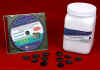
CD-ROM The Entire
Manual with Videos on 1 Convenient Disc Click image to enlarge
HAVE TROUBLE VIEWING OUR
VIDEOS ONLINE OR HAVE A SLOOOOOOW INTERNET CONNECTION? OUR BATTERY RECONDITIONING / REPAIR
MANUAL ON CD-ROM MAY BE THE ANSWER! EACH CD-ROM NOT ONLY
CONTAINS THE ENTIRE MANUAL TO REJUVENATE BATTERIES AND TIPS TO
RE-SELLING THEM, BUT ALL THE STEP-BY-STEP VIDEO INSTRUCTIONS!
NOTE: CD-ROMS PLAY FINE ON COMPUTER DVD
DRIVES, HOWEVER THEY USUALLY DO NOT PLAY ON STAND-ALONE UNITS (THAT YOU
HOOK UP TO YOUR TV)
$4.99 FREE
SHIPPING FOR CONTINENTAL USA
(THE LOWER 48 STATES) ONLY.
Customers
NOT IN CONTINENTAL USA, please contact
us for shipping quote first
SAMPLE
KIT Enough to Repair 2 Batteries Click image to enlarge
WHAT YOU GET: 1 CUP BATTERY CHEM™
SULFATION REMOVAL CHEMICAL 6 PLASTIC CAPS (to re-seal drilled batteries) 1 BATTERY MANUAL (the webpage address
to where you can download the complete manual is included in the kit.)
$19.95 FREE
SHIPPING FOR CONTINENTAL USA
(THE LOWER 48 STATES) ONLY.
Customers
NOT IN CONTINENTAL USA, please contact
us for shipping quote first
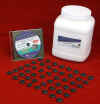
STANDARD
KIT Enough to Repair 10 Batteries Click image to enlarge
WHAT YOU GET: 1 QUART BATTERY CHEM™
SULFATION REMOVAL CHEMICAL 12 PLASTIC CAPS (to re-seal drilled batteries) 1 BATTERY MANUAL ON CD-ROM (CD-ROM
includes the video instructions!)
$49.95 FREE
SHIPPING FOR CONTINENTAL USA
(THE LOWER 48 STATES) ONLY.
Customers
NOT IN CONTINENTAL USA, please contact
us for shipping quote first
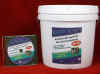
JUMBO
KIT Enough to Repair 40 Batteries Click image to enlarge
WHAT YOU GET: 1 GALLON BATTERY CHEM™ SULFATION
REMOVAL CHEMICAL 48 PLASTIC CAPS (to re-seal drilled batteries) IF
YOU DON'T NEED THE PLASTIC CAPS, LET US KNOW AND WE'LL DEDUCT $4.80 FROM
PURCHASE PRICE! 1 BATTERY MANUAL ON CD-ROM (CD-ROM includes the video instructions!)
$119.95 FREE
SHIPPING FOR CONTINENTAL USA
(THE LOWER 48 STATES) ONLY.
Customers
NOT IN CONTINENTAL USA, please contact
us for shipping quote first
NEW!!
FORKLIFT DESULFATION KIT Enough to Repair ONE 48 Volt
Battery -OR- TWO 36 Volt Batteries Click image to enlarge
WHAT YOU GET: 2 GALLONS BATTERY CHEM™ SULFATION
REMOVAL CHEMICAL
1 BATTERY MANUAL ON CD-ROM
(CD-ROM includes the video instructions!)
$197.00 FREE
SHIPPING FOR CONTINENTAL USA
(THE LOWER 48 STATES) ONLY.
Customers
NOT IN CONTINENTAL USA, please contact
us for shipping quote first
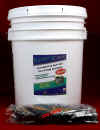
BULK
RESUPPLIES Enough to Repair
200 Batteries! Click image to enlarge
A GREAT NEW DEAL FOR
THOSE WHO REPAIR MANY CAR OR FORKLIFT BATTERIES! 5 GALLONS OF BATTERY CHEM™
SULFATION REMOVAL CHEMICAL PLUS240 PLASTIC CAPS (to
re-seal drilled batteries) IF
YOU DON'T NEED THE PLASTIC CAPS, LET US KNOW AND WE'LL DEDUCT $24 FROM
PURCHASE PRICE!
5 GALLONS FOR THE PRICE OF 4!
A $600 VALUE FOR
ONLY $459.95!
FREE
SHIPPING FOR CONTINENTAL USA
(THE LOWER 48 STATES) ONLY.
Customers
NOT IN CONTINENTAL USA, please contact
us for shipping quote first
EXTRA
CAPS
Click image to enlarge
PLASTIC CAPS TO RE-SEAL
DRILLED BATTERIES IF YOU NEED EXTRA CAPS FOR YOUR
BATTERIES, WE OFFER QUANTITIES OF 24 - 48 - AND 96 CAPS
Customers
NOT IN CONTINENTAL USA, please contact
us for shipping quote first
24
PLASTIC CAPS
$4.95
48
PLASTIC CAPS
$7.29
96
PLASTIC CAPS
$11.95
FREE
SHIPPING FOR CONTINENTAL USA
(THE LOWER 48 STATES) ONLY.
The reason we formulated Battery Balancer is because certain batteries even after reconditioning, still have a lower than normal specific gravity (SG) and this lowers the amp hours capacity of the battery-- in spite of the fact that it may be working perfectly otherwise. The reason that the specific gravity is still low on a reconditioned battery is because the acid in the electrolyte is in a weakened condition usually caused by age, using tap water instead of distilled water, overheating, repeated overcharging and poor maintenance practices. Any one of these things can damage the battery acid. In most cases Battery Balancer when used
properly, will correct this condition.
The best way to do this is after treating the battery with Battery Chem™ first and allowing a six hour cool down period you add Battery Balancer a tablespoon measure at a time to only the cells with the low specific gravity each day until all the cells have gained their full specific gravity readings back for a normally fully charged battery. 1.260 to 1300 is acceptable. Repeat the process until all cells are reading at least 1.260. If your cells are over filled with water you can remove extra water with your hydrometer and save it in a plastic bottle for the next time that you need to add water. Batteries that are frequently charged need to have water added to them weekly in many cases so always check them or you will ruin them. ALWAYS USE DISTILLED WATER IN YOUR BATTERIES. TAP WATER WILL RUIN THEM.
You can compare the specific
gravity reading of a battery to the octane rating for fuel.
Let's use an electric golf cart or electric forklift for
examples. A lead/acid battery pack that is fully charged at
a specific gravity of 1.265 has much more electricity
(energy) stored in it than a battery pack with a specific
gravity reading of 1.200 which is very low. Like fuel octane
where the higher the rating-- the better mileage you get in
your car, the higher the specific gravity in your
battery--the longer the charge lasts. A forklift battery
that's supposed to last 12 hours on a charge, but only lasts
5 hours can really cost a company a lot in lost production.
Batteries are rated in amp hours of storage. The more amp
hours of electricity stored the more fuel you have in your
tank, so to speak. Batteries with high amp hours of actual
energy stored will propel your vehicle further than
batteries with very few amp hours left in storage.
As a battery ages it loses efficiency. Contributing factors
to the loss of efficiency in a lead acid battery are low
water, not using distilled water, over charging, under
charging, improper charging, sulfation, damaged battery
acid, short circuits and mechanical failure. We prefer
flooded lead/acid batteries with service caps with the
emphasis on service.
When used with the proper service our additive products Battery
Chem™` and Battery Balancer can double or even triple the lives
of your heavy duty batteries.
Battery Balancer Specific Gravity Testing Procedures
A must read before proceeding.
Always
use distilled water only in your batteries
Battery
Balancer is only to be used after a battery has been fully treated with
our primary product Battery Chem, fully charged and load tested.Otherwise you will receive false readings and could over treat
the cell.Always keep
a written record of your readings.
You will need to protect your eyes, face, hands
and clothing before working on lead acid batteries because they contain
sulfuric acid.
In order to use this product properly you will need a Battery Hydrometer.
It is the best way to tell the state of the electrolyte in a lead acid
battery.
Use a hydrometer to measure the specific gravity
of the electrolyte solution in each cell.The hydrometer is a simple and inexpensive test instrument used to measure the
density or weight of a liquid compared to the density of an equal amount
of water. A lead acid battery cell is fully charged with a specific
gravity of 1.265 at 80° F. For temperature adjustments, get a specific
gravity reading and adjust to temperature by adding .004 for every ten
degrees above 80° F and subtracting .004 for every10 degrees below 80°
F.We like to see Specific Gravity readings between 1.215 to
1.300With automotive
batteries averaging about 1.260 and heavy duty traction batteries
topping out at 1.300.Readings
of 1.300 will wear the battery out faster.1.260 is good for automotive and readings of 1.215 to 1.260 are
good for battery back up applications.Higher than recommended readings will definitely store more
Amperage but will wear the battery out faster.
A battery cells specific gravity is a great way of
measuring a batteries state of charge. This is because during a
discharge the specific gravity decreases linear with ampere-hours
discharged. The specific gravity also increases as the battery is
recharged.
A BATTERY MUST BE FULLY CHARGED AND REST AT LEAST
8 HOURS WITH NO LOAD BEFORE YOU CAN TAKE AN ACCURATE SPECIFIC GRAVITY
READING OR IT WILL NOT BE ACCURATE.
We have a free video on this procedure.
Cells
that are out of balance (Lower Specific Gravity) when others are readingfully charged must have Battery Balancer added to them.
BUY BATTERY
BALANCER HERE
YOU GET 1 DRY QUART WITH FULL
INSTRUCTIONS ON HOW TO USE BATTERY BALANCER
$34.95 +
FREE
SHIPPING FOR CONTINENTAL USA
(THE LOWER 48 STATES) ONLY.
EVERYONE ELSE PLEASE
CONTACT
US
FOR SHIPPING QUOTE
Click image to enlarge
NEW!
TUBE
STYLE BATTERY TESTER HYDROMETER
Test / Measure the specific
gravity of the battery acid / electrolyte
Easy to read color coded glass
float
Gives precise readings for
status of battery cells
Acid resistant
$11.95 +
FREE
SHIPPING FOR CONTINENTAL USA
(THE LOWER 48 STATES) ONLY.
EVERYONE ELSE PLEASE
CONTACT
US
FOR SHIPPING QUOTE
NOTE:
Some automotive batteries are "sealed"
and require drilling first
1/2 "
DRILL BIT WITH STOP COLLARS
TO DRILL THE
RIGHT SIZED HOLES IN SEALED BATTERIES SO YOU CAN
ADD SULFATION REMOVAL CHEMICAL THEN SEAL AGAIN WITH CAPS (SOLD
SEPARATELY)
The
drill bit comes with the proper collar already
set at the correct distance!
$14.95
FREE
SHIPPING FOR CONTINENTAL USA
(THE LOWER 48 STATES) ONLY.
Customers
NOT IN CONTINENTAL USA, please contact
us for shipping quote first
Click image to enlarge
NEW!
BATTERY
TERMINAL POST & CLAMP CLEANER
Removes corrosion
and cleans SAE top
posts and matching cable connections
$9.95 +
FREE
SHIPPING FOR CONTINENTAL USA
(THE LOWER 48 STATES) ONLY.
EVERYONE ELSE PLEASE
CONTACT
US
FOR SHIPPING QUOTE
Click image to enlarge
NEW!
BATTERY
POST & TERMINAL CLEANING / CUTTING TOOL
To remove
corrosion, place POSITIVE CUTTER over positive battery post
Repeat procedure
for negative post using NEGATIVE CUTTER
For battery
terminal surface, fit reamer into terminal. Rotate.
$11.95 +
FREE
SHIPPING FOR CONTINENTAL USA
(THE LOWER 48 STATES) ONLY.
EVERYONE ELSE PLEASE
CONTACT
US
FOR SHIPPING QUOTE
Click image to enlarge
NEW!
100
AMP BATTERY LOAD TESTER & VOLT METER
Tests 6 & 12
Volt Batteries up to 1000 Cold Cranking Amps
100A / 12V 50A / 6V
Quick
and Easy to Use!
Checks
Battery Voltage
Tests
Battery Capacity (in CCA)
Tests
Alternator or Charging System
Tests
Starter System
For
Testing -
6 & 12 volt batteries up to
1000 cold cranking amps
Volt Meter
Battery state of charge
Battery cranking ability
Charging system output
Starter motor draw test
FEATURES
-
Top mounted rocker switch for
ease of operation
Rubber insulated handle for
comfort and safety
Accurate, shock resistant and
easy-to-read clear view meter
$12.95 +
FREE
SHIPPING FOR CONTINENTAL USA
(THE LOWER 48 STATES) ONLY.
EVERYONE ELSE PLEASE
CONTACT
US
FOR SHIPPING QUOTE
Click image to enlarge
NEW!
BULB
TYPE BATTERY FILLER
Bulb type filler can be
used with many different fluids
Lightweight with a built
in hang hole
Dimensions: 93/8" L
x 2 5/8" diameter
$11.49 +
FREE
SHIPPING FOR CONTINENTAL USA
(THE LOWER 48 STATES) ONLY.
EVERYONE ELSE PLEASE
CONTACT
US
FOR SHIPPING QUOTE
Click image to enlarge
NEW!
FUNNEL
Plastic construct with
built in hang hole
Dimensions: 4 1/2" L
with 3 3/4" mouth and 1/2" spout
$4.49 +
FREE
SHIPPING FOR CONTINENTAL USA
(THE LOWER 48 STATES) ONLY.
EVERYONE ELSE PLEASE
CONTACT
US
FOR SHIPPING QUOTE
Click image to enlarge
NEW!
ALLIGATOR
CLIP ADAPTERS 1 pair
Fully insulated
Color-coded for positive
and negative connections
PLUS: Adapts multi-meter
test lead probes so they can easily attach to test points and
terminals
$5.99 +
FREE
SHIPPING FOR CONTINENTAL USA
(THE LOWER 48 STATES) ONLY.
EVERYONE ELSE PLEASE
CONTACT
US
FOR SHIPPING QUOTE
Click image to enlarge
NEW!
BATTERY TEST
PROBES 1 pair
To test the voltages in
each battery cell
Use in conjunction with
Alligator clips and Digital Multi-meter
Made of high quality chromed
steel measuring approx. 8 inches long and 1/8 inch thick
$3.99 +
FREE
SHIPPING FOR CONTINENTAL USA
(THE LOWER 48 STATES) ONLY.
EVERYONE ELSE PLEASE
CONTACT
US
FOR SHIPPING QUOTE
Click image to enlarge
NEW!
COMPLETE
BATTERY TOOLKIT
Buy all the tools in one
kit and save money! What you get:
1 Hydrometer
1 Battery Terminal Post and Clamp
Cleaner
1 Battery Post & Terminal
Cleaning/Cutting Tool
1 Load Tester
1 pair Goggles
1 Battery Filler
1 Funnel
1 Digital Multi-meter
1 pair Alligator Clips
1 pair Probes
1 Drill Bit
1 Stop Collar Set
FREE BONUS! 1
CD-ROM with Manual and Video Demos!
OVER $165 IF YOU PURCHASED
ALL THESE ITEMS SEPARATELY!
$114.95 +
FREE
SHIPPING FOR CONTINENTAL USA
(THE LOWER 48 STATES) ONLY.
EVERYONE ELSE PLEASE
CONTACT
US
FOR SHIPPING QUOTE
MARKETING
SUGGESTIONS
We suggest that you charge $24.00 minimum with an
exchange battery in trade for your rebuilt batteries. Your warrantee should be
twelve months prorated at one twelfth per month ($2.00) in this example.
Remember that the most successful companies today are the ones who give
excellent customer service. Be fair with your customers and don't be afraid to
replace the product or give them their money back. It always pays in the long
run.
We sell all of our scrap batteries by the truckload.
Most of the big battery companies will buy them back and recycle them. They use
the lead, the plastic, and the acid. Nothing is wasted. They will buy them by
the trailer load. They will usually pick up if you have a full trailer load.
Auto
Meter BusPro 600s
12
Volt 5 Amp
Six
Station Battery Charger
Click each
picture to enlarge
The
BusPro 600s utilizes individual transformers and microprocessors
for both low and high volume battery charging applications. Each
of the six 5 amp charge stations is independently controlled.
Lights indicate defective battery, charging, maintaining, and
improper connections. Each controller prevents overcharging and
removes sulfating automatically.
FEATURES
6 foot battery charge leads
Modular construction
Removes sulfating
automatically
Wall or Surface mount
Microprocessor controlled for
unsurpassed battery recovery
Automatic float control for
long term battery maintenance
Optimal 3 Step charging
Built-in Mode Indicators
Reverse Polarity Protection
Short Circuit Protection
Overload Protection
1 Year
Warranty
SPECIFICATIONS Dimensions: 36"L x 8"W x 3"H
Weight: 29lbs
Enclosure: Powder Coated Steel
Output Banks: 6
DC Output: 5 Amps
Max Current During Bulk Charge: 5 Amps
AC Input Volts: 115 Volts (220 Volts also available)
AC Input Volts Frequency: 60Hz (50Hz also available)
AC Input Amps: 5 Amps
Float Voltage: 13.2 Volts
Operating Temperature: 0° to 120° F
Regulatory Approval: UL Listed
Manufacturer: Auto Meter
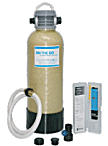
Our units produce laboratory grade deionized water used in everything from auto detailing, manufacturing to kidney dialysis. Deionization is a method used by laboratories to produce purified water. The pure definition: "Removal of Ions". The term is generally used with respect to the removal of ions from water. Deionization is commonly achieved by passing the water through successive ion exchange columns. In one column, ions are exchanged for H+ ions. In another column, anions are exchanged for OH- ions. Following a reaction of H+ with OH- ions, no ions remain in solution. It is produced through ion exchange. Simply said, water flows over porous beads that are positively and negatively charged and the minerals or total dissolved solids are removed. These ion exchange columns are porous beads called exchange resins.
Mixed Bed Deionizer Standard Model
Compact and lightweight at only 18 pounds, this deionizer measures 6 ¾" in diameter by 22" in height. The unit contains ¼ cubic feet of high grade virgin mixed bed resin. This unit is easy to hook up or remove depending on your application. Works great in the garage, laboratory, on the road or anywhere you need deionized (DI) water. Unit comes complete with the deionizer, 4' high pressure hose, hand-held TDS meter, shut-off valve, and a cap/plug for the inlet/outlet.
Part Number:
OTG2-SDI
Design:
Mixed Bed System
Size:
22" x 6.75"
Weight:
18 lbs
Capacity:
0.25 cubic feet
Tank:
Single
Capability:
250 PPM = 180 gallons
Warranty:
1 Year Limited Warranty
Meter:
Portable TDS Hand-held Meter
FlowRate:
Less than 2 gallons/minute for best
performance & effectiveness
$239.99
+ FREE
SHIPPING FOR CONTINENTAL USA
(THE LOWER 48 STATES) ONLY.
EVERYONE ELSE PLEASE
CONTACT
US
FOR SHIPPING QUOTE
Dual Bed Deionizer Standard Model
The unit is made up of dual tanks using two difference premium resin products. The first tank in the series contains ¼ cubic feet of cation resin and the second tank contains ¼ cubic feet of anion resin. When running these tanks in series you produce approximately 2 ½ times more water and will reduce your operating cost by 50% compared to the single tank mixed bed deionizer. The dual tank will save you money and give you a great return on your investment. The dual tank model comes with all the necessary fittings including a polypropylene cam lever for easy hook-up and only needs a 10" by 20" compact area. Unit weighs a mere 36 pounds. Unit comes complete with the deionizers, 4' high pressure hose, hand-held TDS meter, shut-off valve, and a cap/plug for the inlet/outlet.
Part
Number:
OTG2-DDI
Design:
Dual Bed System
Size:
22" x 6.75"
each
Weight:
18 lbs each
Capacity:
0.25 cubic feet
Tank:
Dual Tank
Capability:
250 PPM = 460 gallons
Warranty:
1 Year Limited Warranty
Meter:
Portable TDS Hand-held
Meter
FlowRate:
Less than 2
gallons/minute for best performance &
effectiveness
Connector:
Polypropylene Cam Lever
$409.99
+ FREE
SHIPPING FOR CONTINENTAL USA
(THE LOWER 48 STATES) ONLY.
EVERYONE ELSE PLEASE
CONTACT
US
FOR SHIPPING QUOTE
Capability of Models
CAPACITY:
The
effectiveness of the DI process is determined by measuring the
resistivity/conductivity of the deionized water, many times
measured in parts per million (PPM). Water quality from
deionizers varies with the type of resin, feed water quality,
flow, efficiency of regeneration, remaining capacity,
temperature, etc.
The
TDS of the water source will help to determine local capacity of
your unit and output of our deionizer to indicate when
change-out is necessary can be done easily with our simple to
use meter provided. The TDS can range from zero to
1000 PPM. The frequency for refilling is dependent upon the TDS
of the water source, flow rate and the gallons used per
application.
Model:
Standard
Standard
Part #:
#OTG2-
SDI
# OTG2-DDI
Design:
Mixed
Bed
Dual Bed
Capacity:
0.25
CU FT
0.25 CU FT
TDS
Level (PPM)
Gallons
Gallons
100
450
1,150
200
235
600
250
180
460
300
160
400
400
115
290
Warranty and quality performance is the best in industry! Again, our units produce laboratory grade deionized water used in everything from auto detailing, manufacturing to kidney dialysis. Our deionization systems use only a premium grade virgin exchange resin. Our systems use high quality exchange resin from the leading supplier of specialty resins for ion exchange, catalyst, absorbents and specialty applications markets worldwide. It would be very difficult for any manufacturer to provide rock-solid numbers for resistivity, conductivity and the associated parts-per-million without a water analysis being completed. All of our systems are produced using high grade
polyglass tanks, design with wide mouth cap for easy refill, includes rugged construction and are adaptable for either hose or pipe thread connections.
MAKE
CHECKS/ M.O. PAYABLE TO: A to Z Global
Marketing Inc.
CHECK
PAYMENTS ARE HELD 10 DAYS TO CLEAR.
Mail
to:
A
to Z Global Marketing Inc.
34
Mount Avenue
Lincoln,
RI 02865
CREDIT
CARD ORDERS CAN BE TAKEN OVER THE TELEPHONE.
DIAL
401-725-8141 MON.-FRI. 8AM-5PM EASTERN TIME.
VISA
• MASTERCARD • AMERICAN EXPRESS • DISCOVER
ALL SALES ARE FINAL. WE WILL
REPLACE ANY DEFECTIVE MERCHANDISE.
NO
DELIVERIES TO P.O. BOXES! WE NEED A STREET ADDRESS TO DELIVER TO
PLEASE
INCLUDE YOUR PHONE NUMBER; WE CANNOT SHIP WITHOUT IT!
Here is a brief summary of
what to do... The first thing that you must realize is that
not all
batteries can be rejuvenated. They must undergo a few simple tests to determine
their present condition.
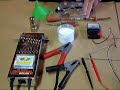
You will need some simple equipment and supplies in
order to perform the required tests and to recondition the batteries:
1.
A DC voltmeter.
2.
An automotive battery load
tester. It comes with full instructions from the manufacturer.
3.
A battery Hydrometer.
4.
A small electric drill.
5.
A good quality battery charger.
6.
A pair of homemade wire probes to
clip to the test leads on your voltmeter. These are used to test
each cell in the battery. They should be about eight
inches long and can be made from brass brazing rod. This retards
corrosion of the probes.
7.
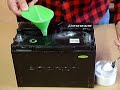
A plastic funnel to add the
chemicals into each cell.
8.
A supply of the Battery Chem™
battery treatment chemical to dissolve the buildup of sulfates in the bottom of
the battery.
9.
A stop drill bit to drill holes
in the top of sealed batteries.
10.
A supply of plastic plugs to seal the holes
in the top of the batteries after repairs are completed. A good quality face shield to protect you eyes
and face.
NEVER WORK ON BATTERIES NEAR AN OPEN FLAME OR WHILE SMOKING. THE
GAS FROM THE BATTERY CAN EXPLODE! ALSO, THE BATTERY ACID CAN BURN YOUR SKIN
AND CLOTHING.
Connecting cables to charge more than one battery
at a time in parallel or in series if you have a series charger. Do not
overload your charger.
This should cover your equipment and supply needs.
Now we will explain how to evaluate the battery for
rebuilding or for scrap.
1.
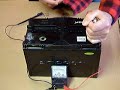
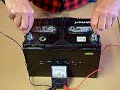
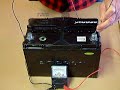
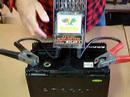
Place the battery on your test bench. Connect
your load tester to the positive and negative terminals.
The positive
terminal is always the larger terminal and should have a + sign on it or
next to it.
DO NOT HOOK UP BACKWARDS AS YOU COULD DAMAGE THE LOAD TESTER.
ALWAYS PUT THE POSITIVE LEAD ON FIRST AND REMOVE IT LAST TO AVOID DANGEROUS
SPARKS.
2.
Read the voltage shown on the load test meter. If the voltage is less than 12
volts chances are that the battery cannot be rebuilt. In the case of a
six-volt battery it should read six volts. A battery that reads a volt
less might bear further investigating. While the load tester is still hooked
up you should perform a load test. Pressing the button on the tester and
watching the needle does the test. Hold the button down for ten or fifteen
seconds. If the needle drops like a rock and stays on zero the battery is
probably junk. If the needle gradually climbs up to the yellow or green on
the load test dial there is a good chance the battery can be rebuilt.
Remember that each cell if it is working should read two volts. If the meter
only reads ten volts total then you must have a dead cell. We don’t fix
dead cells because we don’t take batteries apart.
3.
One more set of tests that you can perform just
to be sure is the cell test. We do two of them. One with a voltmeter and one
with the battery hydrometer. If the battery has caps, pry them off. If it is
sealed, drill the holes in the top of each cell with a stop drill so you won't hit the plates and damage them. Make sure all the cells have water
covering the top of the plates. This could be the problem to start with.
4.
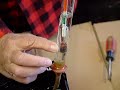
Take the hydrometer and draw up the acid from the
first cell. The scale that is marked on the hydrometer will tell you the
condition of that cell. Make a note of the reading of that cell. Green is
good, White is questionable and red is dead and probably will not come back
with the treatment. Notice the color of the electrolyte while you are
drawing the electrolyte from the cell. Draw it in and out several times so
that you will disturb it and mix it up. This will give you a more accurate
reading and also if the color is cloudy brown or black it means that the
cell is in bad shape.
5.
The voltmeter test is another very reliable test.
Take the voltmeter and set in on the range that best reads out for twelve
volts or six volts as the case may be. Clip the test leads onto each of the
homemade brass probes.
a.
Place the positive test lead on the positive
terminal of the battery.
b.
Stick the negative probe into the first cell next
to the positive terminal. It should read approximately
two volts. If it does
not, record the voltage. Lower than two volts indicates a weak or bad cell.
c.
Stick the negative probe into the second cell and
stick the positive probe into the first cell that you
just tested. Again, it
should read approximately two volts. Record the voltage.
d.
Follow this procedure right down the line to the
last cell.
REMEMBER THAT THERE IS ONLY
A ZERO READING FROM THE LAST CELL TO
THE NEGATIVE POST. Otherwise the total
would be fourteen volts and not
twelve. You have now pinpointed the low or dead cells in the
battery.
e.
If you consider the tests to indicate a marginal
battery that might come back even though the test
indicate it is junk you
can perform the following procedure. Make sure all of the cells have water
above the plates by at least one quarter of an inch. Add one tablespoon of
the chemical reviver to
each cell. Place the battery on the charger for one
hour at a high rate of charge. Do not boil out the
cells. After an hour you
can then retest the low cells that you recorded. If they are reading two
volts each you may then charge the battery at a low rate for at least
twenty-four hours. It is more efficient
to charge several batteries at one
time on a low charge-using hook up cables. These may be
obtained at an
automotive supply store.
f.
If the battery you are testing passes all of the
tests you may then place it on the charger for a long
slow charge. It is
important to note that most of the batteries on the market today have lead calcium
plates in them and when they get discharged down to a very low
voltage they require a long slow recharge.
YOU MUST ADD ONE TABLESPOON OF
OUR BATTERY CHEM™ BATTERY TREATMENT CHEMICAL PURIFIER INTO EACH CELL TO
DISSOLVE THE SULFATES THAT ARE BUILT UP ON THE PLATES.
g.
After the battery has been on the low charger for
twenty- four hours you should load test it and check the specific gravity of
each cell with the hydrometer. All of the cells have to be in the green
scale and the battery should load test no lower than the yellow scale on the
load tester for a period of ten seconds. Follow the instructions furnished
with your particular load tester.
h.
The above procedures may seem complicated but
they are not. You will learn them very quickly by experience. Do not be
afraid to experiment with marginal batteries. Remember that you can load
test them to be sure they are reliable and also, that you are giving your
customer a twelve-month prorated warrantee on the unit.
NEVER ARGUE WITH A
CUSTOMER. GIVE HIM ANOTHER BATTERY OR GIVE HIM HIS MONEY BACK.
Good customer
service is the ONLY way to succeed in the
long run; word gets around
fast.
i.
It is a good idea to save the electrolyte from
the batteries that you junk. You may want to add some from time to time.
This would be used in the case where you have a perfectly good battery but through
someone's carelessness they wore a hole in it and you want to
repair the hole and refill that cell.
NEVER ADD ACID TO A BATTERY JUST TO SERVICE
IT. YOU MIGHT BLOW IT UP! The best way to repair a hole in a battery is to
use some fiberglass cloth and a two part epoxy resin repair kit. Just mix up
the resin as per instructions and use it to glue several layers of the patch
cloth over the hole. It is very important that you clean off the area around
the hole with solvent that won't leave a residue (Denatured alcohol) and
scratch up the case so the epoxy will stick better. Many a good battery has
been saved with this procedure. Most of this is just common sense and always clean the rebuilt batteries with a mild solution of baking soda and water to
neutralize the acid, and also clean up the terminals so that every battery
looks as good as new.
1. Never buy a sealed battery.
Always buy a battery with water filler service caps.
2. Check the water level in your battery every 30 days. Be sure to wear
eye, face, and hand protection. Do not make flames, or sparks near a
battery.
3. Never add tap water to your battery. Always add distilled water from
the Super Market. Do not overfill. Just keep the water level 1/4 inch
above the battery plates. Use a flash light to see in the filler ports
to view the plates.
4. Be sure to add one tablespoon of Battery Chem™ to each cell in your
battery at least once a year. Well maintained batteries can last over 12
years.
5. Clean your battery cables every 6 months. To prevent dangerous sparks
and burns from accidental grounding always remove the negative ground
cable connector first and replace it last when servicing the battery
terminals.
6. Always practice full safety precautions when servicing lead acid
batteries
FREQUENTLY ASKED
QUESTIONS
Battery Chem™
Questions and Answers
Q. Can Battery Chem™ work as it say it does?
A. Battery Chem™
works on 70% of the batteries that are able to pass our initial tests as
explained in our training manuals and videos. Battery Chem™
will not repair a shorted or totally dead cell. It is mainly for the
recharging of sulfated lead acid batteries. Read the training manual and
watch the videos on this website.
Q. On average, how long does it extend the battery life?
A. Our testing shows that when our chemical is used in a quality battery it
will last from 2 to 5 years.
We have revived giant forklift batteries that have sat in freezing cold
warehouses for three years and were never charged even one time. Battery
reconditioning is not an exact science and results often vary. But 70%
success is a reliable figure. We are selling literally tons of it here in
the USA. It is going to people who recondition batteries by the 5 gallon
pail. We have also sold it to members of the military. Our factory in India
has also. We have already received certifications.
Q. How can I try this for myself?
A. You can purchase a sample package of Battery Chem™.
There is enough to recondition two automobile batteries. Purchase a sample
package on this website.
Q. How long has Battery Chem™ been on the market?
A. We have successfully manufactured and sold Battery Chem™
for over 25 years.
Q. Are there any other products out there like Battery Chem™?
A. We sell a dry mixed chemical compound and I have never seen another
product like it. We have tested many liquid products with very bad
results.
Q. Do we need a business license and permit for a Battery Chem™ business?
A. It would depend on your city and its rules and regulations if you need a
business license and permit. If you were going to do your business from a
garage where people would be coming to drop off batteries, then I would
think it is advisable to check with your town/city requirements.
Q. Are there grants for this type of business?
A. We suggest that you check with your town/city offices. There may be
something that you can learn about to help start your business. Battery Chem™
helps keep batteries out of the landfills before their time. You never know
until you ask.
Q. If I put in too much Battery Chem™,
will it ruin the battery?
A. You can never ruin a battery by putting in more Battery Chem™.
Check on this web site for the correct amount for the automobile batteries,
and the forklift batteries.
Q. When I recondition a fork lift battery is there anything else I should do after it is finished?
A. Yes, you should always tell the customer about the Monthly Maintenance
Agreement that you have. It will not only keep you in front of your
customer, but it will also save your customer money because you will be
there checking the battery monthly, to make sure that it is working
correctly.
Q. What are the advantages of selling the Monthly Maintenance Agreement to my forklift battery customer?
A. Most batteries fail early because of improper service. The people that
drive the forklifts just don’t care about them. They do not belong to
them, and they also don’t have to pay to replace the batteries. For
instance they let the batteries go dry and then they add tap water instead
of distilled water. Based on our experiences a battery can last three to
four times longer with proper service and Battery Chem™….that’s
the reason you should promote your Monthly Maintenance Service to your
customer.
Q. I have heard that over time adding water to the battery weakens the
acid. Will adding Battery Chem™ stop the need to add acid?
A. We have found that many service people are sucking out worn out
electrolyte and replacing it with fresh acid and then adding Battery Chem™.
You have to be careful not to exceed the normal specific gravity reading
though. The old acid does wear out.
Q. Does Battery Chem™ work on golf cart batteries also?
A. Battery Chem™ is great for golf cart batteries! Each cart, depending on the make and model, have either 4 – 6 batteries per cart, and you would charge a fee for each battery you service. As you can see, this is a very profitable business to be in! A good idea would be to do one cart for them for free, and when they see the great results you get from Battery Chem™, they will hire you to do the rest of their fleet. The batteries in the carts are 6 volt batteries-- they have less cells, but they are larger by volume, so you would use 2 tablespoons per cell.
Q. Do you have some type of guide on how to price golf cart batteries that we recondition?
A. You would set your own price according to what your market will allow in
your area. Also look up the cost of replacement batteries to get an idea of
what to charge your customer.
Q. If the battery must always read 12V before its ready to add Battery
Chem™, if it doesn’t ready 12Volts,
does it mean it can’t be saved or that it’s life can’t be extended?
A. If the voltage is below 12 volts, you can give the battery a 30 minute hi
amp charge and then retest the total voltage. Make sure to do a load test
also. After you treat the battery, you charge it on high amps until you see
all the cells bubbling. That takes 15-20 minutes then, at 2 amp usually
overnight. It varies from battery to battery. If you do not have our
automatic chargers, you just keep monitoring and load testing the batteries.
After a few batteries you get a feel for testing and charging times.
Q. Once the Battery Chem™ has been added and charged, how often do you have to add Battery Chem™ again and re-charge it?
A. Once a year should be fine. If the alternator on the vehicle is working
properly, you should not have to charge the battery. The alternator should
keep it charged. If a battery goes dead, it can be from a bad alternator,
dirty cables, loose connections, or a defective voltage regulator.
Q. How much Battery Chem™ is needed to recondition a battery?
A. 6 Volt Battery = 2 tablespoons of Battery Chem™
per cell
Solar Battery = 2 tablespoons of Battery Chem™
per cell
12 Volt Battery = 1 tablespoon of Battery Chem™
per cell
Forklift Battery = 1 cup of Battery Chem™
per cell
Q. How about 18 wheelers? Is Battery Chem™ good for them also?
A. Of course! Battery Chem™
is effective on all lead acid batteries. There are usually 4 per truck. The
batteries are 12 volts in most cases, and it is advisable to put 2
tablespoons per cell instead of one. All the cells should be tested for 2
volts each, before adding chemicals.
Q. How do you test a fork lift battery?
A. The testing for the forklift battery reconditioning is exactly the same
as in the video for the regular 12 volt batteries, except that forklift
batteries have 12 cells = 24 volts, 18 cells = 36 volts, and 24 cells = 48
volts. The larger batteries are required because more power is needed to
lift the larger loads.
Each cell should read at least 2.2 volts to 2.5 volts when fully charged.
The technician should charge the battery, do the tests, then add the Battery
Chem™
to each cell. It is best to add 1 cup per cell. Then put the battery back
into service, and it will continue to improve with each charging,
discharging, and recharging cycle. Charging, discharging and recharging
results in a vast improvement in battery performance. You can see a real
time video on this website.
Q. Do batteries have to be on a charger while adding water?
A. No.
Q. How can I become a distributor for Battery Chem™?
A. Give us a call at the office, and we can discuss that with you. The
office number is 401-725-8141.
Q. Is there a MSDS report that you can send me?
A. Yes, just contact us at the office and we will email it out to you.
401-725-8141